Thursday, October 1, 2026


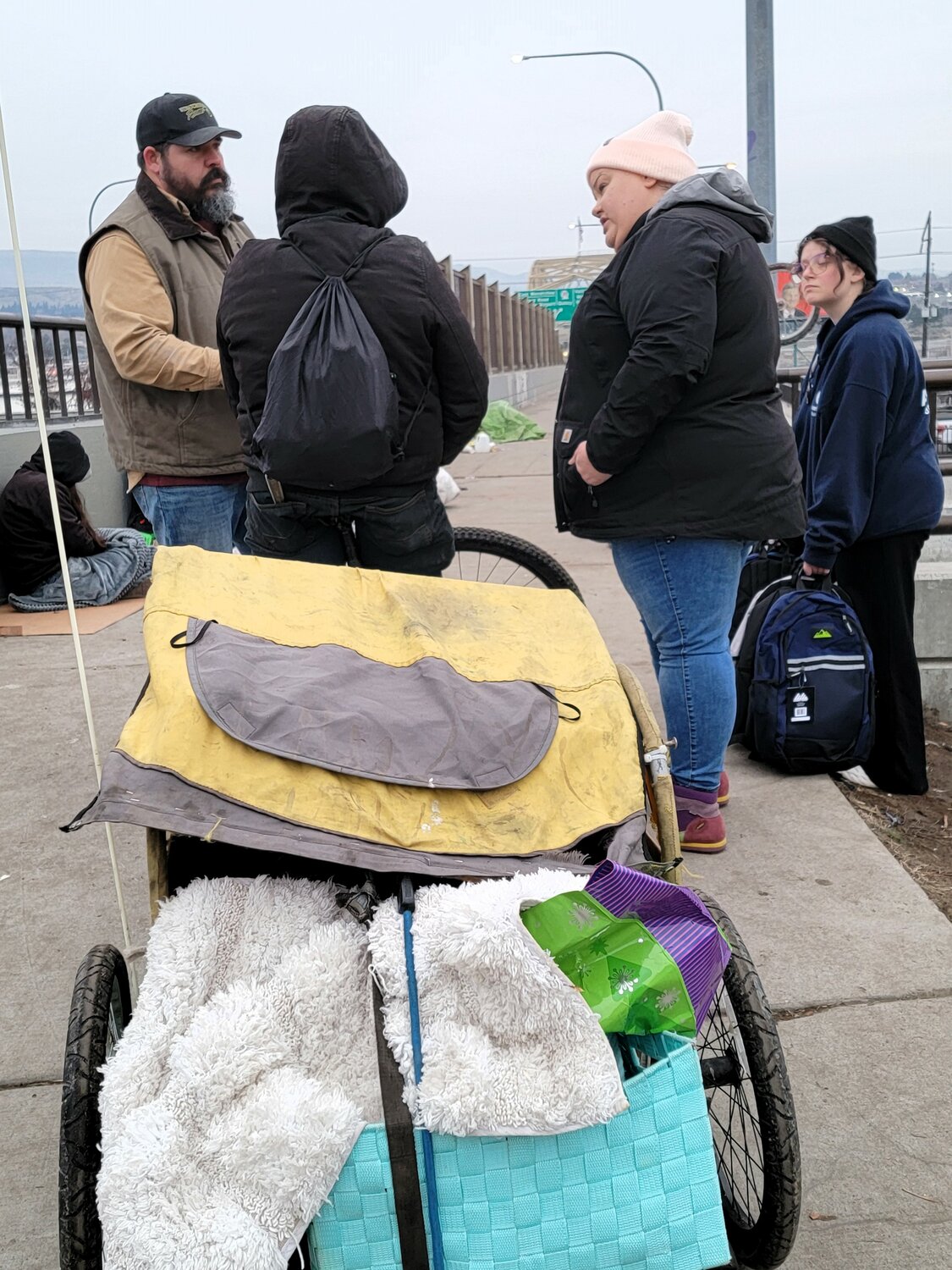


WENATCHEE — Before sunrise on Jan. 29, outreach workers and volunteers spread out across Wenatchee and neighboring communities looking for people who had spent the night outside.
They checked tents along the river, vehicles parked in quiet corners and improvised shelters tucked beneath bridges. When they found someone awake, they introduced themselves and asked a simple question: Would you be willing to take part in the annual count of people experiencing homelessness?
Those early-morning conversations are part of the nationwide Point-in-Time Count, a one-night survey conducted each January to measure homelessness in communities across the United States.
Results released March 3 show a slight decline in homelessness in Chelan and Douglas counties compared with last year.
This year’s count recorded 93 people living unsheltered, a decrease of 11 individuals, or about 10.5%, from the 104 counted in 2025.
Another 391 people were staying in emergency shelters, transitional housing programs or emergency hotel placements, down from 405 the previous year.
Madison Calloway, Chelan County’s homeless program supervisor, said the numbers offer a useful snapshot but do not capture the full scope of housing instability in the region.
“On the local level, the count helps communities plan services and programs to appropriately address local needs, measure progress in decreasing homelessness, and identify strengths and gaps in a community’s current homelessness assistance system,” Calloway said.
The Point-in-Time Count is required periodically by the U.S. Department of Housing and Urban Development and is conducted nationwide during the final days of January. The winter timing helps capture people who cannot access emergency shelter or other crisis assistance.
In Chelan and Douglas counties, volunteers surveyed 84 households experiencing homelessness, meaning people living outdoors, in vehicles or RVs, inside abandoned buildings or in other places not meant for habitation.
Most of those households consisted of individuals rather than families with children.
Survey responses suggest that many people experiencing homelessness in the region have deep local ties.
Among those who answered questions about their previous housing, more than 80% said their last permanent home had been somewhere within Chelan or Douglas counties, while smaller numbers reported coming from other parts of Washington or from outside the state.
Participants cited a wide range of factors that contributed to their housing situation. Economic pressures — including job loss, eviction and rising housing costs — were among the most common reasons, along with health challenges and family conflict.
This year’s count also faced a logistical change.
For the past several years, the central resource hub for the count was located at Lighthouse Christian Ministries on Columbia Street in Wenatchee. When that property closed, organizers moved the event to the Salvation Army.
Calloway said the shift may have affected participation.
“The location change to the Salvation Army in Wenatchee may have influenced the lower survey amount, especially our foot traffic on that day, because the Lighthouse was more centrally located,” she said.
In addition to the survey teams working outdoors, more than a dozen community organizations participated in the event, offering services and support to people who came to the resource center that day.
Participants included the Women’s Resource Center, Catholic Charities, the Wenatchee Rescue Mission, HopeSource, the Chelan-Douglas Community Action Council and several other local agencies that provide housing assistance, advocacy or legal support.
Chelan Valley HOPE and Upper Valley MEND also hosted outreach events in their communities as part of the regional effort.
Officials emphasize that the Point-in-Time Count represents only a single-night snapshot of homelessness and cannot account for everyone experiencing housing instability.
Still, the data helps local governments and service providers track trends over time and identify gaps in the region’s housing and support systems.
The next federally required count will take place in 2028, though local agencies will continue collecting data and monitoring conditions in the years between.
Andrew Simpson: 509-433-7626 or andrew@ward.media


Comments
No comments on this item Please log in to comment by clicking here