Thursday, October 1, 2026

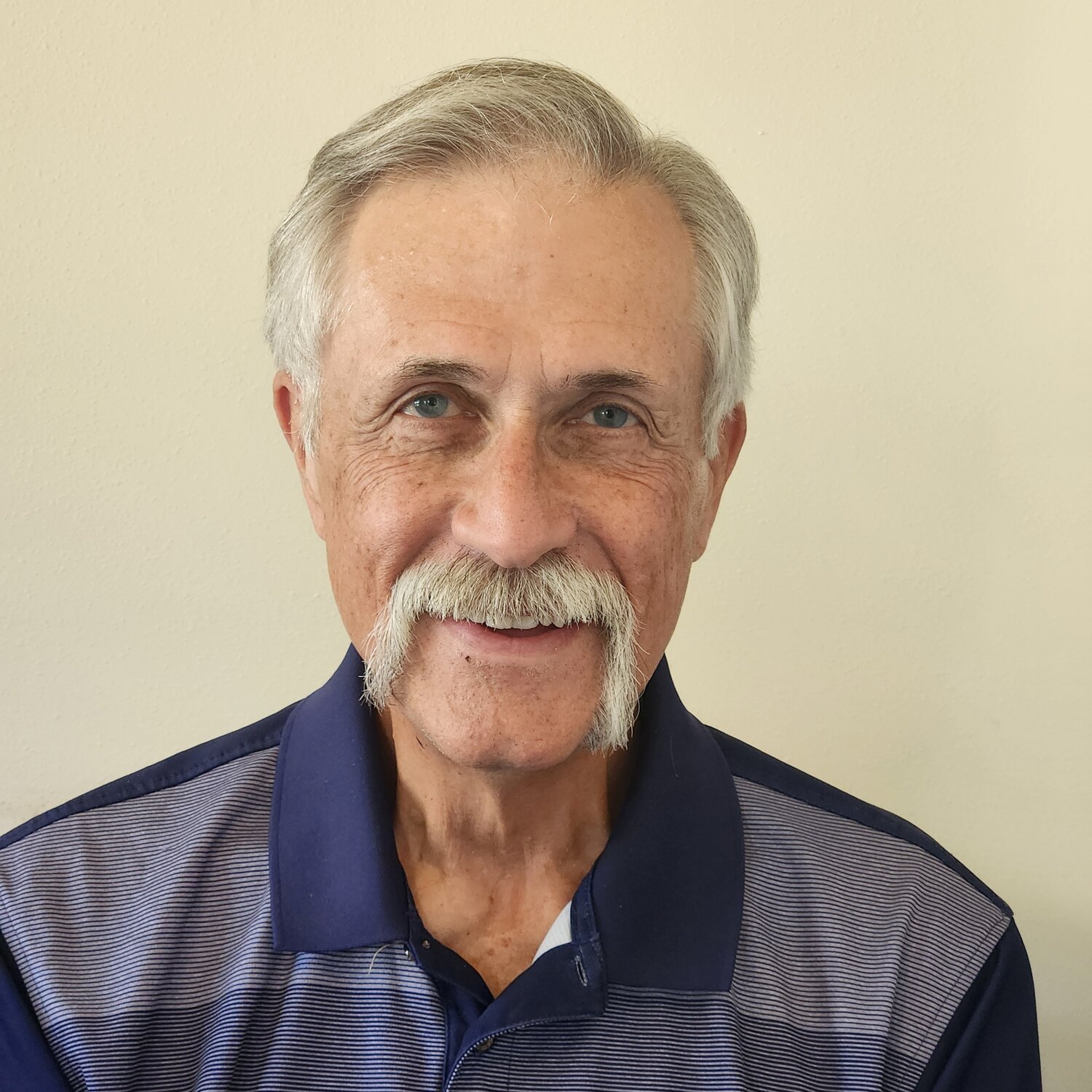


WENATCHEE — Once you make a name for yourself as a judge in a small town, especially one that’s known for fairness, transparency, and a knack for sniffing out the truth in the pursuit of justice, people don’t tend to forget that name.
And when it has a nickname in quotation marks included — as in the case of retired judge T.W. “Chip” Small — you tend to end up the kind of person that gets quoted a lot, maybe memorialized in the city’s history if you presided over some big cases. Maybe you even get a street or a scholarship or the legal section at the public library named after you.
That’s what happens in novels, anyway, and Chip Small’s name alone sounds like a character from one of his own books. In fact, he himself is a little like a character in a legal thriller: Imposing in height, an unmistakable moustache, a booming voice and enough tales to fill an entire afternoon.
Small doesn’t have any statues of him (yet), and he’s not really the kind of guy who would want one. He’s offended by excess, except of words, and spent most of his life up to this very day enjoying what’s felt to him like the hand of Providence in achieving the milestones he’s put in the history books.
But history books aren’t what he cares about now, and he’s not relying on serendipity anymore. He cares about his main character, Arnie Adams, the star of his “Justice” trilogy, and he’s been rolling up his sleeves. The product of that work has just been released in the form of the second book in the trilogy, “True Justice.”
Small’s first foray into legal thrillers was almost pure fiction. “Stark Justice” drew on Small’s experience, of course, but wasn’t based on something specific. The new novel, however, is inspired by real life events.
The fiction part is almost made for a book jacket blurb: Attorney Arnie Adams is in a relentless pursuit of justice in a small town. Volunteering for a family law case with explosive consequences, Arnie finds his practice threatened when he joins the defense in a high-stakes murder trial. The case divides the small, picturesque town of Eagleton in a fast-paced, eye-opening tour of the criminal justice system. It even lets readers contemplate questions of morality and the transformative power of love and faith.
The real life events the book is based on, however, are straight out of Judge Small’s life. Almost exactly 22 years ago, a Chelan County Sheriff’s Deputy named Saul Gallegos radioed in that he would be at an address on State Route 150 between Chelan and Manson, near where the casino is now. He had been following a gray ‘89 Mercury Sable station wagon with a driver he recognized, whose license was suspended, a suspect named Jose Sanchez-Guillen.
Sanchez-Guillen had pulled into a driveway and attempted to flee on foot, up a hill. Witnesses at the scene saw Deputy Gallegos fighting with Sanchez-Guillen behind the residence and suddenly heard gunshots. They stood helpless as Gallegos fell dead to the ground, shot in the head with his own service weapon.
After Sanchez-Guillen escaped, the intrigue only heightened. His mother tried to help him get away, apparently headed for Mexico. They visited a family friend in Warden, some 130 miles from the scene of the crime, and while asking him for help in getting to Pasco, the mother told the family friend that her son had killed Deputy Gallegos. Legally speaking, helping him turned her into a criminal as well, and her statements were admitted in court, ultimately resulting in her going to jail.
There was a manhunt that covered the entire west coast and included Mexico, and everything turned into the biggest story in years out of the tiny town of Manson. You know, the kind of case that makes people remember you.
Now-retired Judge T.W. “Chip” Small of the Chelan County Superior Court handed down Mr. Sanchez-Guillen’s sentence of life in prison without the possibility of parole for his conviction of aggravated first-degree murder. Then the case made it into his newest book, more than two decades later.
But you’ll note the mention of another case in the “book jacket blurb” earlier, and that one’s based on real events as well, and this time far more personal for Judge Small.
At the beginning of his career as a judge — he was appointed by Governor Booth Gardner in 1991, and this happened in 1992 — there was a case that had been going on for some time before he was on the bench. It involved Bill and Ann Smith, whose divorce and child custody case from 1989 was one of the most protracted and contentious in all of Chelan County’s history.
The father in the case — and this isn’t speculation, but rather the conclusion of historical research and legal details at the time — had so successfully turned his children against their mother, who he psychologically abused in the extreme, that he was awarded primary custody.
Ann Smith eventually, with the aid of therapy, was able to regain a level head and in fact remarried in 1991. She began to pursue partial custody and her ex-husband was ordered to get their four children into counseling. Bill Smith refused over and over to get counseling for the children, believing that they might once again trust their mother. The courts, however, kept letting him off the hook. And that’s where Judge Small comes in.
When William Douglas “Bill” Smith arrived in Judge Small’s courtroom, Small could scarcely believe that he’d been getting away with simply defying court orders. Past details or not, this was a matter of a man being ordered by a court to do something and not complying. He found Smith in contempt of court, but said he would withhold imposing a sanction for a week, since he had a judicial workshop coming up.
The case was so strange to Judge Small, that Smith hadn’t already been punished for ignoring the courts, that he wondered if maybe he was missing something. He wanted to run it past the other judges at the workshop before he handed down a sentence. When he came back, his resolve was firm: Ten days in jail for Smith, and he could serve them on the weekends, since he had a job as a postal clerk at the time.
That turned out to be worse in Smith’s mind than simple counseling for the kids — that meant they would spend 5 consecutive weekends with their mother, who would have every opportunity in the world to prove herself competent, loving and kind. His imagination ran wild with the idea that Ann would turn the kids against him instead. Their mom had people to back her up, after all. She had only been able to leave Bill in the first place with extensive help from her friends.
The next day, Judge Small got a phone call from the Chelan County Sheriff’s Office telling him there had been a homicide, and multiple attempted homicides, and that his life was in danger. Deputies came to escort Small and his own family to a secure location. Bill Smith had murdered his ex-wife Ann and attempted to kill the friends that had helped her escape her marriage to him.
When he was found after a two-day manhunt, he still had the shotgun he’d used on Ann’s friends, as well as a handgun, rifle and even the knife he had wielded in the intensely personal murder of his ex. But most chillingly, he had a list in his pocket of the judges and lawyers he intended to bring harm to. Chip Small’s name was on that list.
The details of these cases are so compelling that there wasn’t much else for Judge Small to do but fictionalize them and put them in a book, especially having already completed one novel in the series. His book before he started writing fiction was entitled “You Are Not a Lawyer Anymore: A Primer for Those Who Want to be a Good Judge,” and that likely informed his writing here as much as the events he’s created a novel around.
Justice was served in the two cases that Small based this novel on. Although prosecutors decided not to pursue the death penalty against Jose Sanchez-Guillen, believing his youthful appearance and lack of criminal history would work in favor of the defense, Sanchez-Guillen will never breathe free air again. And while Bill Smith pleaded insanity, his remorselessness in court removed any possibility that he’ll ever get out either. A couple in Cashmere adopted all four of Ann and Bill’s children together, so they weren’t even separated after the death of their mother and incarceration of their father.
You can get copies of all of Judge Small’s books, including his non-fiction work, on his website, judgesmallbooks.com.
Andrew Simpson: 509-433-7626 or andrew@ward.media


Comments
No comments on this item Please log in to comment by clicking here